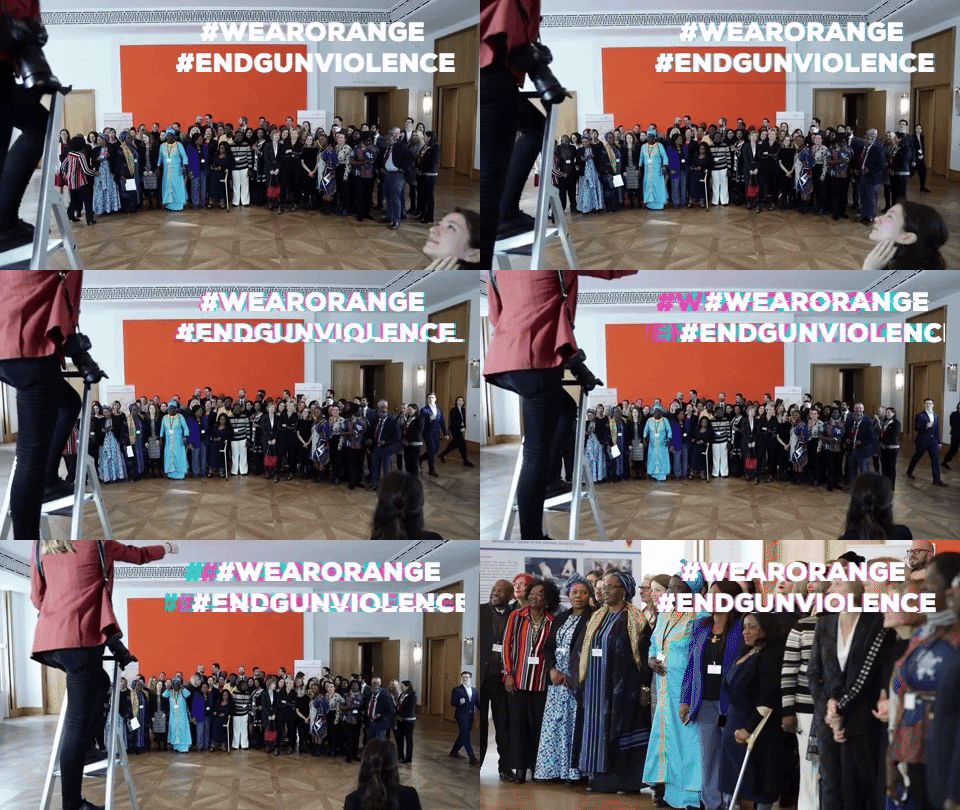
Gender considerations are now more firmly embedded within arms control discussions, implementation mechanisms have expanded, and the links between firearms proliferation, gender-based violence (GBV), violence prevention, and inclusive security governance are increasingly recognized. At the same time, implementation remains uneven, while political contestation, funding constraints, and persistent gaps in data and institutional capacity threaten continued progress.
This report takes stock of developments between 2021 and 2026, examining how gender-responsive SALW control has evolved across multilateral processes, regional frameworks, and national policies. It identifies key trends and persistent barriers to implementation, while exploring opportunities presented by developments including the ATT Gender Focal Points, the Global Framework for Through-life Conventional Ammunition Management, National Prevention Strategies, and discussions on emerging technologies.
The findings point to a field that is increasingly focused on turning commitments into practice, but also facing new obstacles. As the international environment becomes more challenging, sustaining progress will depend on stronger implementation, adequate resources, better evidence, and continued engagement by States, international organizations, and civil society.
By Josephine Alabi, GENSAC Youth Ambassador, Director of Keen and Care Initiative
Photo: APP
On September 17, 2024, the Gender Equality Network for Small Arms Control (GENSAC) participated in a high-profile workshop titled “Gender Mainstreaming in Preventing the Proliferation of Small Arms and Light Weapons in Nigeria and West Africa.” The event, held at the National Counter Terrorism Center in Abuja, Nigeria, was organized by the National Centre for the Control of Small Arms and Light Weapons (NCCSALW).
Representing GENSAC was Josephine Alabi, Executive Director of Keen and Care Initiative and GENSAC Youth Ambassador. Keen and Care Initiative, a longstanding GENSAC member and advocate against SALW proliferation, has been a key player in sensitization campaigns and awareness-raising efforts across Nigeria. In addition to its involvement in GENSAC, Keen and Care Initiative is a member of the International Action Network on Small Arms Control (IANSA).
During the first interactive session on Women, Peace, and Security (WPS) with Major Gen. A.M. Atolagbe (Rtd.), Ms. Alabi emphasized several critical points related to the small arms and the WPS agenda on the following topics:
Data Collection: The need for accurate and comprehensive data is essential to tackle SALW proliferation.
Transnational weapons flows: Addressing the porosity of borders to curb the illegal flow of SALW is a priority in the region.
Synergy Building: To improve enforcement of arms control measures, there must be enhanced collaboration among uniformed personnel.
Youth Engagement: There is a concerning level of involvement with youth in illegal activities, including those which entail the use of Improvised Explosive Devices (IEDs). The security sector must be able to better engage with those at-risk.
Early Warning Signals: Related to the point above, security personnel need additional early warning and response systems and related training.
GENSAC was also pleased to play an active role during a series of discussion on gender perspectives on SALW policy and practice and on women’s participation and empowerment in SALW control. Ms. Alabi highlighted the impact of women’s participation and the urgent need to curb the illegal flow of SALW, which disproportionately affects women and children during armed conflicts. Alabi advocated for:
Increased Female Representation: More women need to be at the decision-making table in SALW engagements.
Community-Level Engagement: Efforts must prioritize local involvement, with a focus on the gendered impacts of arms proliferation.
Engaging Men and Boys: Alabi stressed the importance of addressing masculinity and the role of men and boys in preventing SALW misuse.
The workshop took a collaborative with syndicate group sessions, where participants, including GENSAC’s Youth Ambassador, worked to develop actionable recommendations. Ms. Alabi served as spokesperson for her working group, presenting their ideas that called for:
Stakeholder Collaboration: Mapping relevant actors and improving coordination between security agencies and community stakeholders.
Enhanced Data Collection: Strengthening systems for gathering and analyzing arms-related data.
Early Warning Systems: Improving mechanisms to detect and respond to potential threats early.
The workshop ended with reflections on the key outcomes and a vote of thanks from NCCSALW. By the conclusion of the workshop, participants had laid the groundwork for continued cooperation in addressing the challenges of SALW proliferation, with a strong focus on gender mainstreaming as a critical tool in peace and security efforts. Ms. Alabi and GENSAC look forward to continuing to engage on these important issues and turning the workshop’s recommendations into action.
GENSAC’s participation in this workshop underscored the importance of gender inclusion and collaboration in tackling small arms control, not only in Nigeria but across the West African region.
Traduction en français :
Le rôle du GENSAC dans la promotion de l’intégration de la dimension de genre dans l’atelier nigérian sur les ALPC
Écrit par Josephine Alabi, ambassadrice de la jeunesse du GENSAC, directrice de Keen and Care Initiative
Le 17 septembre 2024, le Réseau pour l’égalité des sexes pour le contrôle des armes légères (GENSAC) a participé à un atelier de haut niveau intitulé « Intégration de la dimension de genre dans la prévention de la prolifération des armes légères et de petit calibre au Nigéria et en Afrique de l’Ouest ». L’événement, qui s’est tenu au Centre national de lutte contre le terrorisme à Abuja, au Nigéria, a été organisé par le Centre national pour le contrôle des armes légères et de petit calibre (NCCSALW).
Le GENSAC était représenté par Josephine Alabi, directrice exécutive de Keen and Care Initiative et ambassadrice de la jeunesse du GENSAC. Keen and Care Initiative, membre de longue date du GENSAC et défenseur de la prolifération des ALPC, a été un acteur clé des campagnes de sensibilisation et des efforts de sensibilisation à travers le Nigéria. En plus de son implication dans le GENSAC, Keen and Care Initiative est membre du Réseau d’action international sur le contrôle des armes légères (IANSA).
Au cours de la première session interactive sur les femmes, la paix et la sécurité (WPS) avec le général de division A.M. Atolagbe (à la retraite), Mme Alabi a souligné plusieurs points critiques liés aux armes légères et au programme WPS sur les sujets suivants :
Collecte de données : La nécessité de données précises et complètes est essentielle pour lutter contre la prolifération des ALPC.
Flux d’armes transnationaux : S’attaquer à la porosité des frontières pour freiner le flux illégal d’ALPC est une priorité dans la région.
Création de synergies : Pour améliorer l’application des mesures de contrôle des armes, il faut renforcer la collaboration entre le personnel en uniforme.
Engagement des jeunes : Le niveau d’implication des jeunes dans des activités illégales, y compris celles qui impliquent l’utilisation d’engins explosifs improvisés (EEI), est préoccupant. Le secteur de la sécurité doit être en mesure de mieux s’engager auprès des personnes à risque.
Signaux d’alerte précoce : En lien avec le point ci-dessus, le personnel de sécurité a besoin de systèmes d’alerte et de réponse précoces supplémentaires et d’une formation connexe.
Le GENSAC a également eu le plaisir de jouer un rôle actif lors d’une série de discussions sur les perspectives de genre dans la politique et la pratique des ALPC et sur la participation et l’autonomisation des femmes dans le contrôle des ALPC. Mme Alabi a souligné l’impact de la participation des femmes et le besoin urgent de freiner le flux illégal d’ALPC, qui affecte de manière disproportionnée les femmes et les enfants pendant les conflits armés. Mme Alabi a plaidé pour :
Une représentation féminine accrue : davantage de femmes doivent être présentes à la table des décisions dans les engagements relatifs aux ALPC.
Un engagement au niveau communautaire : les efforts doivent donner la priorité à l’implication locale, en mettant l’accent sur les impacts sexistes de la prolifération des armes.
Un engagement des hommes et des garçons : Mme Alabi a souligné l’importance de s’attaquer à la masculinité et au rôle des hommes et des garçons dans la prévention de l’utilisation abusive des ALPC.
L’atelier a été organisé en collaboration avec des séances de groupe, où les participants, dont l’ambassadeur de la jeunesse du GENSAC, ont travaillé à l’élaboration de recommandations concrètes. Mme Alabi a fait office de porte-parole de son groupe de travail, présentant leurs idées qui appelaient à :
Collaboration des parties prenantes : cartographie des acteurs concernés et amélioration de la coordination entre les agences de sécurité et les parties prenantes de la communauté.
Amélioration de la collecte de données : renforcement des systèmes de collecte et d’analyse des données relatives aux armes.
Systèmes d’alerte précoce : amélioration des mécanismes de détection et de réponse précoce aux menaces potentielles.
L’atelier s’est terminé par des réflexions sur les principaux résultats et un vote de remerciements de la part du NCCSALW. À la fin de l’atelier, les participants avaient jeté les bases d’une coopération continue pour relever les défis de la prolifération des ALPC, en mettant l’accent sur l’intégration de la dimension de genre en tant qu’outil essentiel des efforts de paix et de sécurité. Mme Alabi et le GENSAC se réjouissent de continuer à s’engager sur ces questions importantes et de mettre en pratique les recommandations de l’atelier.
La participation du GENSAC à cet atelier a souligné l’importance de l’inclusion et de la collaboration entre les sexes dans la lutte contre le contrôle des armes légères, non seulement au Nigéria mais dans toute la région de l’Afrique de l’Ouest.
Traducción al español:
El papel de GENSAC en impulsar la perspectiva de género en el taller sobre armas pequeñas en Nigeria
Escrito por Josephine Alabi, embajadora de la juventud de GENSAC, directora de Keen and Care Initiative
El 17 de septiembre de 2024 la Red de Igualdad de Género para el Control de Armas Pequeñas (GENSAC por sus siglas en inglés) participó en un taller de alto perfil titulado “Incorporación de la perspectiva de género en la prevención de la proliferación de armas pequeñas y ligeras en Nigeria y África occidental”. El evento, celebrado en el Centro Nacional contra el Terrorismo en Abuja, Nigeria, fue organizado por el Centro Nacional para el Control de Armas Pequeñas y Ligeras (NCCSALW).
En representación de GENSAC estuvo Josephine Alabi, directora ejecutiva de Keen and Care Initiative y embajadora de la juventud de GENSAC. Keen and Care Initiative es miembro de GENSAC desde hace mucho tiempo; su trabajo en la lucha contra la proliferación de armas pequeñas y ligeras ha sido clave en las campañas de sensibilización y los esfuerzos de concienciación en toda Nigeria. Además de su participación en el GENSAC, la Iniciativa Keen and Care es miembro de la Red Internacional de Acción para el Control de Armas Pequeñas (IANSA).
Durante la primera sesión interactiva sobre Mujeres, Paz y Seguridad (WPS) con el Mayor General A.M. Atolagbe (Rtd.), la Sra. Alabi destacó varios puntos críticos relacionados con las armas pequeñas y la agenda WPS sobre los siguientes temas:
Recopilación de datos: La necesidad de datos precisos y completos es esencial para abordar la proliferación de armas pequeñas y ligeras.
Flujos transnacionales de armas: Abordar la porosidad de las fronteras para frenar el flujo ilegal de armas pequeñas y ligeras es una prioridad en la región.
Creación de sinergias: Para mejorar la aplicación de las medidas de control de armas, debe haber una mayor colaboración entre el personal uniformado.
Participación de los jóvenes: Existe un nivel preocupante de participación de los jóvenes en actividades ilegales, incluidas las que implican el uso de dispositivos explosivos improvisados (IED). El sector de la seguridad debe poder interactuar mejor con las personas en riesgo.
Señales de alerta temprana: En relación con el punto anterior, el personal de seguridad necesita sistemas adicionales de alerta temprana y respuesta y la capacitación relacionada.
GENSAC también se alegró de desempeñar un papel activo durante una serie de debates sobre las perspectivas de género en las políticas y prácticas sobre armas pequeñas y ligeras, y sobre la participación y el empoderamiento de las mujeres en el control de las armas pequeñas y ligeras. La Sra. Alabi destacó el impacto de la participación de las mujeres y la necesidad urgente de frenar el flujo ilegal de armas pequeñas y ligeras, que afecta desproporcionadamente a las mujeres y los niños durante los conflictos armados. Alabi abogó por:
Mayor representación femenina: es necesario que haya más mujeres en la toma de decisiones en relación al control de armas pequeñas y ligeras.
Participación a nivel comunitario: los esfuerzos deben priorizar la participación local, centrándose en los impactos de género de la proliferación de armas.
Participación de hombres y niños: Alabi destacó la importancia de abordar la masculinidad y el papel de los hombres y los niños en la prevención del uso indebido de armas pequeñas y ligeras.
El taller se desarrolló en colaboración con sesiones de grupos sindicales donde los participantes, incluido el Embajador de la Juventud del GENSAC, trabajaron para desarrollar recomendaciones viables. La Sra. Alabi actuó como portavoz de su grupo de trabajo y presentó sus ideas, que exigían:
Colaboración de las partes interesadas: Identificar a los actores pertinentes y mejorar la coordinación entre los organismos de seguridad y las partes interesadas de la comunidad.
Mejorar la recopilación de datos: Fortalecer los sistemas de recopilación y análisis de datos relacionados con las armas.
Sistemas de alerta temprana: Mejorar los mecanismos para detectar y responder a posibles amenazas de forma temprana.
El taller finalizó con reflexiones sobre los resultados clave y un voto de agradecimiento del NCCSALW. Al concluir el taller los participantes dejaron sentadas las bases para una cooperación continua para abordar los desafíos de la proliferación de armas pequeñas y ligeras, con un fuerte enfoque en la incorporación de la perspectiva de género como herramienta fundamental en los esfuerzos por la paz y la seguridad.
La Sra. Alabi y GENSAC esperan seguir participando en estas importantes cuestiones y convertir las recomendaciones del taller en acciones. La participación de GENSAC en este taller subrayó la importancia de la inclusión de género y la colaboración para abordar el control de las armas pequeñas, no solo en Nigeria sino en toda la región de África occidental.
Our representative, Natalie M Briggs, crafted this powerful statement on behalf of GENSAC for the ATT CSP10.
I am honored to speak on behalf of the representatives of the Gender Equality Network for Small Arms Control (GENSAC), a broad and diverse network of women peacebuilders, security officials, grassroots civil society and women’s rights groups, and disarmament experts. We are honored to address this esteemed group to highlight the importance of ensuring a gendered perspective as related to the trade and transfer of arms to ensure they do not exacerbate the large – and differentiated – impact of small arms and light weapons on women and girls.
We are deeply concerned about the devastating role that small arms and light weapons play in perpetuating violence against women and girls. The arms trade is a critical global issue that can intensify violence against women and girls in all settings when managed irresponsibly and when gender is not accounted for. The diversion of arms from the licit to the illicit market puts lives in danger. It is well documented that recent conflicts have exacerbated illicit arms proliferation and increased levels of conflict-related sexual and gender-based violence. Even in places considered to be “at-peace,” women frequently are at the greatest risk in their own homes, making up the overwhelming majority of victims of intimate partner violence with illicitly circulating weapons frequently used as tools of violence and coercion.
As outlined in the recently released report of the Pathfinders Halving Global Violence Task Force, which GENSAC was pleased to contribute to, the impacts of armed violence go beyond physical harm, leading to severe economic and social consequences. These consequences deepen gender inequalities and perpetuate cycles of violence, significantly hindering efforts toward sustainable peace and development.
We are pleased to see positive steps towards incorporating gender into international instruments, such as Article 7.4 of the ATT, The Global Framework for Through-life Conventional Ammunition Management, and the UN Programme of Action on Small Arms and Light Weapons that stress the importance of building on this positive momentum and harmonizing across these treaties and processes, as well as across agencies, in line with this year’s Conference of State Parties theme of interagency coordination. This must include efforts to ensure ATT implementation and the Women, Peace, and Security frameworks are seen as mutually reinforcing and engage stakeholders across national and domestic agencies, as well as with civil society, national women’s organizations, the private sector, and international organizations. Gender mainstreaming will improve implementation of the Arms Trade Treaty and limit the risks posed to all societies from the misuse of small arms.
Finally, we wish to call attention to the fact that women are still too often excluded from policies and processes designed to limit harm that can be associated with small arms. Guaranteeing the full, equal, meaningful, and effective participation of women in decision-making and implementation processes will ultimately yield better results for all people.
Recommendations
In light of these realities, GENSAC urgently calls for bold and decisive action to address the intersection of diversion of licit arms, small arms misuse, and gender inequality. As such, we urge states parties to the ATT to prioritize the following actions:
1. Enforce provisions in the ATT, including article 7.4, that prevent the transfer of weapons to contexts where they are likely to illicitly circulate and be misused, whether by state or non-state actors, including but not limited to the commission of sexual and gender-based violence, and take these factors into account in their export risk assessments.
2. Ensure equal opportunities for women’s participation in political decision-making, policy formulation, and implementation of measures related to the Arms Trade Treaty and related efforts to curb small arms proliferation, including by increasing women’s meaningful involvement in security processes.
3. Seek to enhance interagency coordination and collaboration on issues related to small arms trade and transfer, including by better linking ATT implementation and the Women, Peace, and Security agenda.
4. Provide local and national civil society organizations (CSOs), including women’s organizations, with sufficient civic space, information, and financial resources to effectively engage in public oversight and advocacy on small arms issues, including by incorporating their perspectives into decisions related to small arms trade and transfers.
5. Encourage and support the learning and sharing of best practices between civil society from different regions and countries as related to the efforts to control the illicit trade of small arms.
6. Provide international cooperation and assistance to improve data collection mechanisms to gather gender-disaggregated data on the impact of small arms proliferation and misuse on women and girls as to inform arms transfers and the implementation of the Arms Trade Treaty.
7. Ensure that decisions related to arms trade practices are designed with strong gender-sensitive frameworks, taking into account women’s lived experiences, and leveraging technology to enhance their efficacy.
On this tenth anniversary of the ATT, we have seen the ways in which this admirable instrument can advance global peace and security, as well as the ways in which implementation has fallen short. On behalf of women and girls who are suffering from illicitly circulating small arms – and all those who suffer from the misuse of weapons – we urge all of those present to continue to uphold and strengthen the implementation of the ATT by ensuring a gender perspective is an integral part of all related policies and efforts.
Statement by the Gender Equality Network for Small Arms Control (GENSAC) at the Fourth United Nations Conference to Review Progress Made in the Implementation of the Programme of Action to Prevent, Combat and Eradicate the Illicit Trade in Small Arms and Light Weapons in All Its Aspects and the International Tracing Instrument (RevCon)
As representatives of the Gender Equality Network for Small Arms Control (GENSAC), a diverse network of women peacebuilders, security officials, grassroots civil society and women’s rights groups, and disarmament experts, we stand before this esteemed assembly to bring your attention to the gendered impact of small arms proliferation and misuse, and how gender analysis and gender mainstreaming will improve implementation of the PoA.
We are deeply concerned about the devastating role that small arms play in perpetuating violence against women and girls. The illicit proliferation of small arms and light weapons is a critical global issue that intensifies violence against women and girls in both conflict and non-conflict settings. While this issue is pervasive globally, recent escalations of violence in various regions have particularly worsened the plight of women and girls.
Although men are the primary victims of firearms violence, women make up the majority of victims of intimate partner violence. Furthermore, the impacts go beyond physical harm, leading to severe economic and social consequences. These consequences deepen gender inequalities and perpetuate cycles of violence, significantly hindering efforts toward sustainable peace and development. While women are too often excluded from the creation and implementation of SALW processes, policies and programs, we are pleased to see recent instruments, such as The Global Framework for Through-life Conventional Ammunition Management, recognizing the importance of guaranteeing the full, equal, meaningful, and effective participation of women in decision-making and implementation processes.
For the reasons above, we reinstate our belief that incorporating gender perspectives into SALW control will yield better results for all people.
Recommendations
In light of these realities, GENSAC urgently calls for bold and decisive action to address the intersecting issues of small arms proliferation and misuse, and gender inequality. As such, we urge member states to prioritize the following action points:
1. Ensure equal opportunities for women’s participation in disarmament, political decision-making, policy formulation, and lawmaking by increasing women’s meaningful involvement in security processes.
2. Take swift action to accelerate implementation of SDGs 5.2 (gender equality), 16.1 (peaceful and inclusive societies), and 16.4 (reduce illicit arms flows), and prioritize gender-responsive approaches in achieving these goals, particularly in regard to measures to address small arms proliferation.
3. Implement socio-economic empowerment programs for women and marginalized groups to address the underlying drivers of violence and reduce vulnerability to violence and exploitation through targeted interventions.
4. Provide local and national civil society organizations (CSOs), including women’s organizations, with sufficient civic space, information, and financial resources to effectively engage in public oversight and advocacy on small arms control issues. Foster an enabling environment for CSO participation and collaboration.
5. Improve data collection mechanisms to gather gender-disaggregated data on the impact of small arms proliferation and misuse on women and girls as to inform evidence-based policymaking and programmatic interventions.
6. Ensure that all early warning systems are designed with strong gender-sensitive frameworks, taking into account women’s lived experiences, and leverage technology to enhance their efficacy. Provide regular training for law enforcement, military, and community leaders on the use of early warning systems.
7. Establish mechanisms for survivors to seek justice and redress, and uphold women’s rights in small arms control legislation. Provide access to healthcare, psychosocial support, legal aid, and economic assistance to survivors.
8. Engage men and boys as allies in efforts to prevent and address violence against women. Promote transformative approaches that challenge harmful norms related to masculinity and firearms.
The illicit proliferation of small arms not only perpetuates violence, but systematically erodes the fabric of our communities, obstructing peace, and diluting global efforts to cultivate a safer, just and inclusive world.
In this critical moment, we urge member-states to act with urgency and resolve. Only through such decisive actions can we hope to build societies that offer true security and equality for all their members. This call to action transcends mere political advocacy; it is a moral mandate to uphold the dignity and rights of every individual, especially the most vulnerable among us.
On Thursday, 20 June, during the first week of the UNPoA’s Fourth Review Conference, a pivotal side event titled “Connecting the Dots: Advancing the Implementation of the UNPoA and the Women, Peace and Security Agenda by Enhancing Parliamentary Capacity, Action and Civil Society Engagement in East Africa, Latin America and Asia’’ took place in New York. Co-moderated by Karin Olofsson, Secretary General of the Parliamentary Forum on Small Arms and Light Weapons (PFSALW) and Daniel Friedman, Gender Equality Network for Small Arms Control (GENSAC) Secretariat, and co-hosted by PFSALW, GENSAC, and the Ministry of Foreign Affairs of Chile, the event gathered an esteemed panel of experts and a diverse audience to discuss the intersection of arms control and gender issues.
The event began with an opening from Karin Olofsson, who emphasised the importance of parliamentary action and political will in preventing violence related to small arms and light weapons (SALW) and advancing the UNPoA. She noted that the side event was the culmination of a series of seminars aimed at engaging parliamentarians to identify recommendations for the Fourth United Nations Conference to Review Progress Made in the Implementation of the Programme of Action (RevCon4) as part of a project funded by the United Nations Office on Disarmament Affairs (UNODA), the Trust Facility Supporting Cooperation on Arms Regulation Fund (UNSCAR). The discussions were set to present conclusions from regional seminars held in Southeast Asia and East Africa, with additional insights from Latin America and civil society perspectives.
Ambassador Paula Narváez, Permanent Representative of Chile to the United Nations, underscored Chile’s commitment to a Feminist Foreign Policy, ensuring the inclusion of a gender perspective in arms control discussions. She highlighted the adverse effects of firearms on women and the necessity of integrating gender considerations into all arms control measures. Narváez pointed out that comprehensive efforts to prevent gender-based violence are crucial for achieving long-term peace and security.
Hon. Dr. Raphael Chegeni, Member of Parliament, Tanzania, and President of PFSALW, elaborated on the legislative, oversight, and awareness-raising roles of parliamentarians in regulating small arms acquisition and transfer. Chegeni detailed recent key actions recommended in the Parliamentary Action Plans adopted in East Africa and Asia, including the need for robust national and regional implementation mechanisms under the Women, Peace, and Security (WPS) agenda, cooperation between neighboring countries, and voluntary arms surrender programs to mitigate SALW-related violence. Furthermore, the importance of increasing awareness of transnational crime and ensuring sufficient budgetary resources for these initiatives was stressed.
Hon. Margarita Stolbizer, Member of Parliament from Argentina, provided a compelling account of the impact of firearms on vulnerable groups, particularly LGBTQ+ communities and women. She shared alarming statistics from Argentina, where femicides involving firearms predominantly affected women who knew their assailants. Stolbizer advocated for stringent regulations to reduce armed violence and highlighted the critical role of civil society in promoting national cooperation for peace and security.
Participating virtually, Ms. Isabel Sarasin, Deputy Head of Division, Conventional Arms Control & CSBM, German Federal Foreign Office, emphasised the need for incorporating a gender perspective in small arms control efforts. She noted that women are disproportionately affected by domestic violence involving firearms and stressed the importance of integrating gender considerations into the WPS agenda. Sarasin called for reflective strategies to enhance the effectiveness of arms control within this framework and reiterated Germany’s commitment to supporting these efforts as part of its Feminist Foreign Policy.
Ms. Maria Pia Devoto, Director of Asociación para Políticas Públicas (APP) and GENSAC Member, linked the UNPoA to the gendered impacts of arms and the crucial role of parliamentary action. She highlighted the necessity of modernising laws to address new challenges and shared success stories from Latin America, where parliamentarians have effectively utilised their diplomatic and legislative powers to prevent gender-based violence. Devoto underscored the importance of mainstreaming gender considerations in governance and promoting civil society participation. She cited the annual Arms and Gender convening in South America, supported by GENSAC and Small Arms Survey, as an example of how efforts to connect civil society and parliamentarians can propel positive collaboration and make strides towards more gender-responsive legislation to reduce violence.
The interactive discussion after the panel featured a closing remark from Izumi Nakamitsu, Under-Secretary-General and High Representative for Disarmament Affairs. Nakamitsu highlighted the severe human cost of SALW, citing the UN Secretary-General’s remark that “there is nothing small and light about the impact of small arms and light weapons.” She emphasised the rising death rates among women due to armed violence and stressed the need for strong regulatory frameworks. Nakamitsu advocated for the full inclusion of women and youth in disarmament negotiations, noting that their perspectives are essential for crafting effective solutions. She also pointed out the importance of intergenerational exchanges to find innovative solutions to complex challenges.
Ambassador Narváez further emphasised the urgent need to address violence affecting young people, either as victims or perpetrators. She called for a rethinking of violence prevention programs with a focus on youth inclusion, highlighting the necessity of using platforms to amplify young voices and encourage member states to involve youth delegates in discussions.
Hon. Raphael Chegeni provided a contrasting perspective from Africa, where young people often face joblessness and may resort to using arms. He called for collaborative efforts among politicians, communities, and societies to address these issues and find sustainable solutions.
Ms. Devoto emphasised the need to prepare young professionals for leadership roles and called for donor support to sustain youth engagement programs. She stressed that involving youth is not just a challenge but also a critical investment in the future.
During the Q&A session, Hon. Stolbizer responded to a question about youth inclusion by highlighting the need for tangible examples of legislative successes that have positively impacted civil society. Ambassador Narváez added that in Chile, effective law implementation is impossible without civil society’s involvement, which ensures accountability and political will.
Daniel Friedman wrapped up the event by encouraging everyone’s continued commitment to ensuring gender responsive small arms control and maintaining collaboration across sectors like those we saw on display during this discussion. Hon. Chegeni encouraged attendees to participate in the PFSALW’s social media campaign, “Words Over Bullets,” aimed at raising global awareness about the importance of preventing the illicit proliferation of SALW.
In light of the difficult negotiations surrounding references to gender and diversity in the UNPoA outcome document, this event helped call attention to the need for better linking the WPS agenda and UNPoA, underscoring the importance of maintaining open spaces for collaboration between parliamentarians and civil society to ensure legislation can accelerate action on these commitments. Specific emphasis on the impact of firearms on vulnerable groups, particularly LGBTQ+ communities and women, was also an important contribution. Ultimately, the event underscored the importance of comprehensive efforts involving parliamentary action, gender perspectives, youth inclusion, and civil society participation in addressing the challenges related to SALW. It set the stage for continued collaborative efforts to create a more peaceful and sustainable world and showcase the ways in which regional lessons learned can benefit the international community.
L’article a été écrit par Regina Ouattara (Burkina Faso), ancien Point Focal Régional de GENSAC pour l’Afrique Francophone. Le voyage et la participation pour le forum de Dakar ont été financés par GENSAC. Les vues et opinions exprimées dans cet article sont celles de l’auteur.
La huitième édition du Forum International de Dakar sur la paix et la sécurité en Afrique s’est tenu les 24 et 25 octobre 2022 avec pour thème : « L’Afrique à l’épreuve des chocs exogènes : défis de stabilité et de souveraineté ». Ce rendez-vous annuel d’échanges et de réflexion sur la paix et a sécurité en Afrique a regroupé des chefs d’État et de gouvernement, des représentants d’institutions interafricaines et internationales, des ONGs, des Organisations de la Société Civile, des chercheurs et du secteur privé. Cette édition placée sous la présidence de son Excellence Macky SALL, Président de la République du Sénégal a mis à l’honneur l’Afrique lusophone la participation entre autres personnalités, le président angolais Joao Lourenço et de son homologue cap-verdien José Maria Neves. La France, principal partenaire de l’événement avec le Japon, est représentée par la secrétaire d’État chargée du Développement et de la Francophonie Chrysoula Zacharopoulou. Parmi les ministres des Affaires étrangères annoncés figurent ceux du Mali, de la Guinée ou encore de la Turquie.
Défis de stabilité et dynamique de paix : regarder en face les réalités de l’Afrique
C’est dans un contexte de l’expansion de la menace terroriste, de la recrudescence des coups d’État répétés en Afrique de l’Ouest, de l’ingérence politico-militaire étrangère, des effets combinés du changement climatique et de la COVID-19, ainsi que de la guerre entre la Russie et l’Ukraine, que le Forum de Dakar s’est tenu en offrant aux participants l’opportunité de regarder les réalités du continent en face et de réfléchir aux réponses idoines et urgentes.
Parmi les sujets abordés, se trouvent en bonne place la réforme du secteur de la sécurité ainsi que la coopération militaire entre l’Afrique et ses partenaires.
« Pourquoi aller toujours chercher des solutions à l’extérieur ? ».
Dès l’ouverture du forum, une série de panels de haut niveau animée par diverses personnalités a permis de situer clairement les responsabilités des pays africains, notamment l’incapacité de certains États d’assumer la protection de leurs populations et de créer de conditions minimales de paix et de stabilité pour un développement inclusif et durable. Cependant, il est ressorti également des échanges que le multilatéralisme, avec ses erreurs congénitales, ne permet pas au continent africain de jouir de toutes ses capacités ni de renforcer lesdites capacités afin de pouvoir faire face aux chocs autant endogènes qu’exogènes.
Si, lors des premières éditions du forum, les participants africains réclamaient un engagement des partenaires internationaux sur le continent, à présent, les États africains affirment désormais leur volonté d’être à la manœuvre, d’autant plus que les opérations extérieures ont montré leurs limites pour la sécurisation du continent.
Les participants au forum demandent aux partenaires internationaux de se montrer solidaires en fournissant aux Etats africains un appui logistique et financier, car il revient aux États africains de trouver des solutions appropriées aux différents problèmes sur leur sol. C’est une approche qui marque un tournant, ou encore une évolution de doctrine sans pour autant rompre avec les partenaires techniques et financiers dont l’appui demeure très important dans le contexte actuel, où la menace terroriste gagne du terrain en Afrique de l’Ouest.
Il a été clairement dénoncé la non présence de l’Afrique, berceau de l’Humanité, dans les hautes instances de délibérations politiques et sécuritaires qui se combine à son absence insensée dans les instances de décisions économiques accentuant sa marginalisation.
Par ailleurs, il a été émis au cours des discussions, l’idée de repenser les relations internationales avec une Afrique épanouie qui profite pleinement de ses potentialités, la suggestion a été faite d’intégrer l’Afrique parmi les membres permanents du conseil de sécurité de l’ONU, et cela se justifie bien dans la mesure où cette instance a été mise en place à l’issue de la deuxième guerre mondiale, soit quinze (15) ans avant l’indépendance des pays africains, au moment où ceux-ci étaient associés aux puissances coloniales. La difficulté majeure en actuellement est qu’il faudrait que les États africains puissent s’accorder sur le choix d’un représentant car en réalité, des rivalités persistent entre les plus grandes puissances du continent telles que l’Afrique du Sud, le Nigeria, l’Égypte et l’Algérie.
Certaines questions ou doléances n’ont pu avoir des réponses satisfaisantes à cette huitième édition du forum de Dakar. Par exemple, le Président Sénégalais Macky Sall a saisi la tribune du forum pour relancer le plaidoyer pour une réforme de la gouvernance mondiale afin d’y associer l’Afrique et assurer une “mise à jour” de la doctrine des opérations de maintien de la paix “intégrant pleinement la lutte contre le terrorisme”. Il s’agit là du renouvellement d’une ancienne sollicitation car de nombreux chefs d’États africains jugent la force de maintien de paix peu efficace et souhaiteraient que les casques bleus soient officiellement habilités à combattre les terroristes. Sur le terrain, l’efficacité de la force de maintien de la paix est certes limitée, surtout pour la protection des civils. Malheureusement, l’ONU n’est pas une armée de guerre. Les casques bleus ont pour rôle sur le terrain de favoriser la mise en place des accords de paix. Par conséquent, ils doivent afficher la neutralité et l’impartialité, ce qui est incompatible avec la lutte antiterroriste.
Consolider la souveraineté de l’Afrique
Durant les deux jours des travaux du forum, des plénières ont été couplés d’ateliers portant sur des thèmes diversifiés et orientant la réflexion sur le renforcement de la souveraineté des Etats.
Suite à une séance plénière sur les crises globales et de souverainetés en Afrique, les discussions se sont poursuivies dans divers atelier portant sur :
Coopération entre l’Afrique et ses partenaires dans les domaines de la défense et de la sécurité
Place du secteur privé dans la construction de nouvelles souveraineté en Afrique (énergétique, alimentaire, numérique, etc.)
Jeunesse, citoyenneté et souveraineté : les défis de l’éducation et de la formation
Le forum a saisi, une nouvelle fois, l’occasion qu’offre, de manière exceptionnelle avec la présence des pays comme la France, le Japon, l’Arabie Saoudite, etc., pour lancer un vibrant appel à mieux impliquer l’Afrique qui doit prendre toute sa place pour le renforcement de la démocratie, de la souveraineté et du progrès.
« Si le continent est devenu, aujourd’hui, un des épicentres du terrorisme, c’est bien, parce que le fléau est alimenté par la criminalité transfrontalière, la prolifération illégale des armes, les flux financiers et trafics illicites de tout genre et la participation de combattants étrangers ».
L’un des points forts des discussions du forum a été les dérives du numérique qui constituent aujourd’hui une des menaces les plus sérieuses à la paix, à la sécurité à la stabilité et à la souveraineté des pays africains, menaces d’autant plus difficiles à combattre qu’elles sont diffuses et protéiformes. Ainsi, la cybercriminalité classique s’ajoute à la frénésie quotidienne des réseaux sociaux devenus une fabrique massive de fake news et de manipulation. Les participants ont eu alors l’opportunité de discuter de l’urgence à renforcer les moyens de lutte contre la cybercriminalité.
La huitième édition du forum international pour la paix et la sécurité a tenu ses promesses à l’instar des éditions précédentes. Ce rendez-vous annuel est un véritable incubateur de projets de transformation sociale sur la base de dialogue ouvert. La mémoire collective se souvient encore que l’Ecole de cyber sécurité de Dakar à vocation régionale est le produit d’une édition précédente du forum international de Dakar. Il convient que les africains maintiennent la flamme de cette rencontre annuelle
The article was written by Regina Ouattara (Burkina Faso), former GENSAC Regional Focal Point for Francophone Africa. Travel and participation to the Dakar was sponsored by GENSAC. The views and opinions expressed in this article are those of the author.
The eighth edition of the Dakar International Forum on Peace and Security in Africa was held on 24-25 October, 2022 under the theme: “Africa in the face of exogenous shocks: challenges of stability and sovereignty.” This annual meeting of exchange and reflection on peace and security issues in Africa brought together Heads of State and Government, and the representatives of inter-African and international institutions, NGOs, civil society organizations, researchers and the private sector. This year’s edition of the Forum, under the auspice of H.E. Macky Sall, President of the Republic of Senegal, honored Portuguese-speaking Africa with the participation of, among others, the Angolan President Joao Lourenço and his Cape Verdean counterpart José Maria Neves. France, the main partner of the event together with Japan, was represented by the Secretary of State for Development and Francophonie Chrysoula Zacharopoulou. Among other attendees were also foreign ministers of Mali, Guinea, and Turkey.
Challenges of Stability and Peace Dynamics: Facing the Realities of Africa
The Dakar Forum was held against the backdrop of the growing threat of terrorism, the resurgence of repeated coups d’état in West Africa, foreign politico-military interference, the combined effects of climate change and the COVID-19, and the war between Russia and Ukraine. This setting offering gave participants an opportunity to face the realities of the continent and to reflect on appropriate and urgent responses.
Among the topics discussed were security sector reform issues and military cooperation between Africa and its partners.
“Why always go looking for solutions outside?
At the opening of the forum, a series of high-level panels moderated by various personalities, focused the discussion on the responsibilities of African governments; in particular on their inability in some cases to protect their populations and to create minimal conditions necessary for peace and stability as well as for inclusive and sustainable development. However, it also emerged from the discussions that multilateral system, with its inherent drawbacks, prevents the African continent from developing and strengthening its capacities in order to be able to cope with both external and internal shocks.
If, during the early editions of the forum, the African participants clamored for greater engagement of international partners on the continent, now, the African governments affirmed their willingness to take the lead. Especially since the external interventions have shown their limits in securing peace on the continent.
The forum participants asked from the international partners to show solidarity by providing African states with logistical and financial support. Leaving it up to the African governments to find appropriate solutions to the various problems on their soil. This is an approach that marks a turning point, or an evolution, of an existing doctrine without breaking relations with technical and financial partners whose support remains very important in the current context as the terrorist threat is gaining ground in West Africa.
The participants also denounced that Africa, the cradle of humanity, is not present in the world’s most important political and security deliberations. This, combined with its senseless absence in the economic decision-making bodies, has only further accentuated its marginalization.
Furthermore, during the discussions, the idea was put forward to rethink international relations with a flourishing Africa that takes full advantage of its potential. The suggestion was made to integrate Africa among the permanent members of the UN Security Council. This body was set up at the end of the Second World War, that is to say fifteen years before the independence of African countries which were at the time under colonial domination. The major difficulty, however, remains that the African states are not able to agree on the choice of a representative for a single African seat. In reality, rivalries persist between the continent’s biggest powers such as South Africa, Nigeria, Egypt, and Algeria.
Some questions or grievances could not be satisfactorily answered at this eighth edition of the Dakar Peace Forum. For example, Senegalese President Macky Sall used the forum’s podium to re-launch his plea for a reform of global governance in order to involve Africa and secure an “update” to the doctrine of peacekeeping operations in order to “fully integrating the fight against terrorism.” This is a repetition of a familiar request made by many other African Heads of State who consider the peacekeeping force to be ineffective and would like to see the blue helmets officially empowered to fight terrorists. On the ground, the effectiveness of the peacekeeping force is certainly limited, especially in protecting civilians. Unfortunately, the UN peacekeepers are not a standing army. The role of peacekeepers on the ground is to support the implementation of peace agreements. Therefore, they must display neutrality and impartiality, which is incompatible with the fight against terrorism.
Consolidating Africa’s sovereignty
During the two days of work of the Forum, plenary sessions were coupled with workshops on various issues and focused on themes such as strengthening of state sovereignty.
After a plenary discussion on global crises and sovereignty in Africa, dialogues continued in various workshops on topics such as:
Cooperation between Africa and its partners in the fields of defense and security
The place of the private sector in the construction of new sovereignty in Africa (energy, food, digital, etc.)
Youth, citizenship and sovereignty: the challenges of education and training.
The forum has seized, once again, the opportunity offered by the presence of countries such as France, Japan, Saudi Arabia, etc., to launch a vibrant appeal to better engaged African countries which are ready to shoulder more responsibility in strengthening global democracy, sovereignty, and progress.
“If the continent has become, today, one of the epicenters of terrorism, it is because this scourge is fueled by cross-border crime, the illegal proliferation of weapons, financial flows and illicit trafficking of all kinds and the participation of foreign fighters.”
One of the Forum’s highlights was the discussion about the digital violence that are now one of the most serious threats to peace, security, stability and sovereignty of African countries; threats that are all the more difficult to combat because they are diffuse and ever-changing. Thus, cybercrime is added to the daily frenzy of social networks that have become a massive factory of fake news and manipulation. The participants discussed the urgency to strengthen the ways to fight against these issues.
The eighth edition of the Forum delivered on its promises just like the previous editions. This annual meeting is a real incubator of social transformation projects based on open dialogue. Many will still recall that projects such as the Dakar Cyber Security School has come out of the previous edition of the Dakar International Forum. It is important that Africans keep the flame of this annual meeting alive.
Despite a challenging year, the Gender Equality Network for Small Arms Control presses on!
ByNYU CIC
One year ago, over 100 experts — (mostly) women — gathered in Berlin to discuss how to take small arms control forward. Activated by the urgency of this issue — having seen the shortcomings of the conventional approaches to disarmament, increasing social unrest and violence, and weapons salesgoing up in many countries — the formation of the Gender Equality Network for Small Arms Control (GENSAC) was a response to the need for new thinking and collaboration on small arms control. Indeed, with its first gathering coinciding with devastating news of a mass shooting in Hanau, Germany — which again underscored the dangers of violent extremism and guns — the launch of GENSAC with Germany’s generous support and active collaboration, was both relevant and timely.
GENSAC was launched just before the world as we knew it was about to change. During its official launch in Berlin, news of COVID-19 was just beginning to trickle in for an international group of women and men gender and security champions from the W. Balkans, Africa and LAC.
The meeting gathered practitioners who operate in the security, development, and gender justice sectors. We discussed how the conventional approaches to disarmament had failed to address the gendered dimensions of small arms and the connection between small arms and violence against women. This failure, far from being accidental, is linked to the low participation and representation of women in disarmament fora. GENSAC was initiated to address that issue: to advance gender-responsive small arms control, and promote the meaningful participation and representation of women in small arms decision making.
Since then, the virus has changed all aspects of our lives. Patterns of violence have been changing across the world, increased risk of social unrest breaking into violence. Data shows that violence against womenhas considerably surged since the beginning of the pandemic. Calls for new approachesin order to stop rates of violent death from increasing globally by 2030 are more urgent than ever. Gun violence also continues to claim many lives, both in the streets and inside homes.
In Berlin, GENSAC members proposed efforts to contain the problems of violence should, at their core, focus on gender responsive small arms control. We published an Action paper based on a thorough review of the evidence and a broad range of consultations with the community of global experts in small arms control and gender, and proposed seven practical strategies to take the work forward.
One year on, the challenges we faceand how the international community goes about addressing urgent issues has changed, as well. GENSAC, too, has changed how we communicate across regions and cultures; how we share best-practices; how we create space for advocacy, and support those doing the frontline work.
We have held a series of webinars with our members and partners to discuss the impact of the pandemic on the proliferation of small arms and violence against women. We have also rallied our male allies in a discussion about their role in gender responsive small arms control. Our experts agree that the pandemic has deepened existing inequalities and vulnerabilities in the different regions. Yet, there is insufficient data available on the gendered aspect of the violence that has resulted from this pandemic. To address this, GENSAC has developed a research strategy which will include the publication of issue briefs and reflection pieces aimed at collecting disaggregated data and best practices on gender responsive and small arms control, in the context of the COVID-19 pandemic. We intend to work with our members to involve more arms control stakeholders at grassroots and national levels in our collective effort to advance gender-responsive small arms control.
GENSAC’s one year anniversary coincides with the upcoming celebration of International Women’s Day. This year we are partnering with women’s movements and peace advocates in over a dozen countries to disseminate the second edition of our Action Paper, which has been revised to reflect the gendered impact of the COVID-19 pandemic on small arms control.
The task at hand is challenging, but our steadfast commitment to supporting gender champions working daily to save lives, prevent harm, and make their communities peaceful, remains unchanged.
In our second year, we look forward to GENSAC becoming an even more agile and dynamic platform for knowledge exchanges and
We are committed to working with our partners to distribute their cutting-edge research and knowledge far and wide. We look forward to engaging our members in knowledge production and relying on them for insights on the emerging problems of gun violence they are witnessing in their communities.
We will better support our members. With the appointment of three regional focal points, enhanced communications, and upcoming training and capacity development opportunities, we hope to provide tangible opportunities to those advancing gender responsive small arms control on the frontlines — be they CSO members, activists, academics, or policymakers.
We will continue to invest in decentralized strategies. We will support local and regional activities in light of limited travel opportunities. Despite being grounded, we will work to preserve the cross-regional character of GENSAC, and come up with alternative ways of facilitating those exchanges.
We will loudly advocate, in collaboration with partners such as IANSA, for the inclusion of gender responsive small arms control policy in the multilateral policy space. Key events such as the UN Disarmament Week,BMS6, ATT Conference of State Parties have been postponed or are taking place in a modified format. We will rely on digital campaigns and new ways of conducting advocacy to ensure that GENSAC members can still influence these political processes and their outcomes.
We will meet again. Our signature annual conference will take place, conditions permitting and most likely in a hybrid format, later in the year. Many members have told us how energizing our launch in Berlin was. Some reconnected with colleagues they had not seen in a while. Others expanded their professional networks and felt a sense of solidarity with women from other parts of the world facing similar challenges. Many reported gaining new insights and ideas for their work.
The pandemic has taken — and continues to take — many things from us, including loved ones. We are aware that the recovery will be strenuous and long. Nonetheless, we remain resolute in our commitment to stop the epidemic of gun violence that has been with us for even longer.
By Liv Tørres, director of the Pathfinders for Peaceful, Just and Inclusive Societies
Photo: Nicole Glass / Shutterstock.com
“We all have family members who were killed or injured by small arms.” Scanning a conference room in Berlin earlier this year filled with members of a new network of women organizing for small arms control, a Balkan woman solemnly counted the number of participants’ family members who had stared down the barrel of a gun or were killed. So, if you’re wondering what women have to do with small arms control, the answer is evident: everything.
Every year, more people in non-conflict zones are killed as a result of injuries from small arms than in wars or other conflicts. The majority of those killed are men, most often by other men. From each act of small arms violence, numerous others are physically hurt, threatened and/or traumatized. Many of the victims of this violence are women. Too often, they are threatened, violated, and attacked by men who wield small arms. In the context of the COVID-19 pandemic, this situation has worsened, with firearms sales skyrocketing in many parts of the world. As a result of the health and resultant socioeconomic crisis faced around the world, domestic violence has increased at an alarming rate. And with instability and polarization on the rise, things will get worse. So yes, the mobilization of women is definitely relevant for small arms control.
2020 was expected to be a crucial year to accelerate the implementation of the Beijing Declaration and Platform for Action, twenty-five years since its adoption. The Declaration explicitly links the arms trade to armed violence and outlines how women are both victims of armed violence and pivotal voices in arms control and disarmament efforts. But instead of accelerating progress on the Women, Peace and Security Agenda, we now find ourselves in the midst of a global pandemic, and amidst palpable concern that COVID-19 will push back fragile progress made towards gender equality and justice for women. So, we must fight harder.
A few key facts and figures: the Small Arms Survey estimates that there were over 1 billion small arms in circulation worldwide before the pandemic hit, produced by more than 1,000 companies from nearly 100 countries, with profits from the trade exceeding USD 8.5 billion. There are considerable linkages between legal and illegal markets with substantial numbers of legally acquired small arms entering illicit markets through diversion, corruption, seizure, and loss. The vast majority of global firearms, roughly 85 percent of the known total, belong to civilian owners, more than 850 million of them worldwide. Civilian ownership is also the fastest-growing market, as consumers buy more guns and as former military and law enforcement weapons gradually shift into civilian hands. In the US alone,17 million more gunshave been sold over the past months in parallel with increasing insecurity and tensions due to the pandemic, elections campaigns, and mobilization against racism.
Considerable reduction in global violence, which all countries have committed to deliver by 2030, will only be possible with the effective control of small arms and its ammunition. And it will only be possible with the heavy involvement of women. Why? First — to state the obvious — on their own, men have not managed this challenge all too well up to this point. Second, mobilizing more people and more groups in arms control is necessary in order to insert more power into the movement. Third, we know that this agenda is highly gendered. With the safety of women at stake, it’s critical that women are empowered to contribute with their knowledge and resources in the endeavor to protect themselves.
Armed violence destroys hundreds of thousands of lives every year. For women, this manifests in murder, but also in intimate partner violence, gang- and drug-related violence, suicides, and politically motivated attacks. It results in enormous amounts of fear, worry, stigma, and family care and socioeconomic problems. Marielle Franco, a Rio de Janeiro city counselor fighting for the rights of the LGBTQI, Black, and other marginalized communities in Brazil, was killed in 2018, having experienced all of this first hand. Same with Berta Cáceres, the Honduran indigenous and environmental rights campaigner murdered in 2016. And Karina Garcia who was running for mayor in a municipality in Cauca Colombia who was killed in 2019. Women in Latin America are killed at record rates. As do countless women on other continents. And since the pandemic has taken hold, the situation is worsening.
Of the estimated 70,000 killings of women worldwide every year, roughly 40 percent involve firearms. Guns are evenmore commonly used to injure, intimidate, and coerce women. The Women´s International League for Peace and Freedom (WILPF) also highlights how women and LGBTQI people face gun-related social and political inequalities, and pressures resulting from an increase in female-headed households, inequalities in access to survivor assistance, and higher risk of sexual and gender-based violence. Another reason why women should be heavily involved in arms control and disarmament is their knowledge of and information about what is happening at local community levels. Women are often best-placed in their communities to form networks of informants and gather critical information about tensions, alliances, key drivers, and triggers of conflict, and the ways to address them.
We know that peace agreements negotiated with women around the table are more durable and better implemented. And we know that peacebuilding and rebuilding after conflict are more sustainable where women are involved. Yet, women representedonly six percent of mediators, six percent of signatories, and 13 percent of negotiators in peace processes between 1992 and 2019. Broad-scale prevention work is scarce and women’s voices seldom heard. Meanwhile, rape continues. Sexual harassment continues. Violence continues. The costs of war continue to pile up. And all of it is now crucial to address in the context of increased insecurity, polarization, “weaponization”, and escalating dangers of unrest and conflict following the pandemic, as outlined in the UN Secretary-General’slast reporton Women, Peace and Security. Major reductions in global armed violence will not be achieved without having full and equal participation around the table and a better understanding of the gendered linkages between the various forms of violence and dynamics of violence, insecurity and fragility. The UNSG argues that this is, fundamentally, “a crisis prevention agenda.” It is time to address gender inequality, discrimination, and conflict risks more seriously. Women are survivors and agents of change. We need to alter the narrative about women in small arms control — changing their representation from victims of violence to survivors, and to include their perspectives as influencers and leaders, imbued with the power to call for peace.
With few women around the table in arms controls discussions and peace negotiations, we also lose out on talent. After all, if we want to assemble the best minds to tackle our problems, why recruit from only half the population? By the same token, we need to converge the agendas of small arms control and the broader Women, Peace and Security Agenda. It’s crucial that women help to build the knowledge and evidence base for programming and policymaking, using approaches such as those laid out by the Small Arms Survey’shandbook. Essential efforts must also be made to adjust norms and values, address social stigma, fear of retaliation, and cultural acceptance of domestic violence which often dissuades women from reporting violence to the police and/or engaging in violence reduction programs or arms control.
So, we need to organize. And we need to build networks: stronger networks. We need to exchange learning and experiences, building bonds of knowledge and support. The Gender Equality Network for Small Arms Control, hosted by The Pathfinders and sponsored by Germany,aims to make small arms control more gender-responsive and works to amplify international, regional, national, and local best practices among civil society organizations, women’s groups, conflict prevention, and development communities. The Pathfinders are aiming for further accelerated action in this area. And there are already several strong women involved in arms control and violence reduction, like Dr. Scilla Elworthy, Ghida Anani,Kasha Nabageseraand the SRSG on Violence Against Children, Najat Maalla M’jid.
Some say a woman’s weapon is her tongue. We say it is the networks, the solidarity among us, and the force of the fearless female combatants that have gone before us.